
Real estate fever captures Montreal
After 1885, the cow grazing faded in importance on Hon. Louis Beaubien’s farm. His sale of building lots on the property became more frequent. For example, on December 16, 1887, the weekly real estate magazine, Le Prix Courant, noted that:
We find in this week’s sales a number of building lots on Mr. Beaubien’s land in Mile End, near Mont-Royal Ave. These lots are of good dimensions, 42.6 x 87.6, and sell for $300, part in cash and the rest in constitute [a kind of mortgage]. This kind of sale used to be very popular; it appears that it has not yet faded completely out of use.1
Urbanization of the village progressed from south to north, in the extension of St. Jean Baptiste, which became a district of Montreal in 1886. The fact these building lots were generally sold one or two at a time, leads to the conclusion that the buyers were often small contractors, generally from the construction trades. Previously, we noted that Lovell’s recorded 39 carpenters/joiners, masons, cabinetmakers and painters in its 1878-1879 edition. The process was probably similar to that described by David Hanna in his study of the urbanization of Montreal suburbs — such as Sainte-Marie and Saint-Jacques — during the 1866-1880 period, a time when the duplex was becoming the dominant model for workers housing in Montreal:
Small-scale builders drawn from the building trades were the real developers of Montreal. They dominated small-scale housing construction in every ward but two — affluent northern Saint Antoine and Saint-Laurent. In the eastern wards their presence was overwhelming. They were mainly carpenters and joiners, but their numbers included bricklayers, masons, stonecutters, plasterers and roofers. They were the main propagators of Montreal’s vast duplex cityscape by copying and repeating the model wherever working-class markets existed.2
Louis Beaubien also used the presence of a train station in his advertising to attract businesses to his properties. Clearly, he hoped they would provide work for people moving into the new housing constructed on these building lots (figure 1).
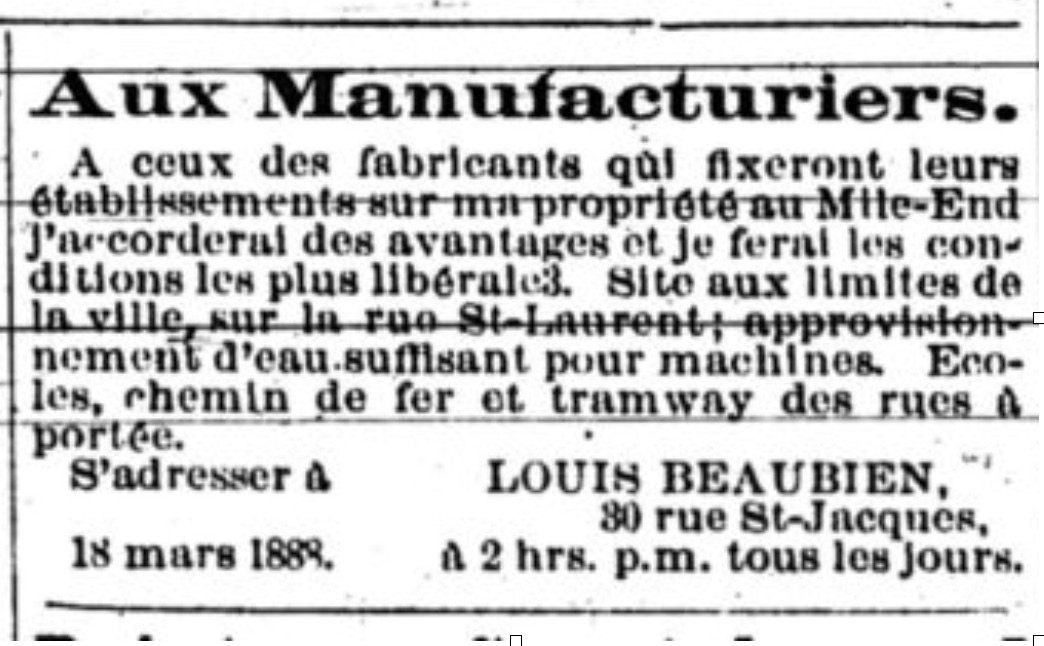
Figure 1 – Le Prix Courant, Vol 2, no 12, 25 mai 1888. p. 15.
Louis Beaubien did not seem to have been adverse to more prestigious development, either. In March, following a joint meeting of the municipal councils of the villages of Mile End and Outremont, he promised to plant ornamental trees along the entire length of a new Avenue, which would extend Saint-Louis Street (Laurier) to the west, thereby linking Saint-Laurent Street to Côte Sainte-Catherine Road in Outremont. But the project did not come to fruition before the beginning of the 20th century.3
The end of the decade clearly marked the beginning of a real estate boom in Mile End. While during the previous two years, Le Prix Courant recorded three or four transactions per week, the number of sales exploded in 1889-1890. And the great majority of them were transacted by Louis Beaubien: reports of lots that he sold occupied complete pages of the Prix Courant’s 1890 “Revue Immobilère”. In fact, the newspaper took note of this, firstly in the spring:
Activity, not just for built properties, but there have also been numerous sales of building lots, which augurs well for construction during the next season.
The prices paid, compared with what the lots had cost to the current sellers, represented in almost all cases, a considerable increase. However, there doesn’t seem to be the slightest appearance of speculation, because the sales are fragmented, it is principally small capital investments that are being carried out in the value of the properties increases with the value of the assets…. We note numerous sales of building lots in St. Jean Baptiste, Mile End, Côteau Saint-Louis and Côte St. Antoine.4
The trend had not declined by the following autumn, on the contrary:
Noteworthy: great number of building lots sold in Mile End, and the St. Jean Baptiste and St. Gabriel districts. In Mile End, it is lots on Mr. Beaubien’s farm that are being actively sold; The movement to annex to the city that is spreading in the two villages of Côte St Louis et de Mile End is feeding speculation activity. If the annexation occurs, the example of St-Jean Baptiste district demonstrates that speculation will be good.5
The newspaper added that sales in Mile End had totalled $16,275 during the previous week. Only the posh municipal wards in the west end of Montreal – Saint-Antoine [Golden Square Mile] and West [part of Old Montreal] – registered higher sales. The speculative fever mentioned by Le Prix Courant was inevitable and had started to attract major players. We will see in a later chapter that they even came from Toronto.6
The Beaubiens, patrons of Mile End
The Beaubien family created a network of alliances with local elected officials, several of whom — including the Villeneuves — were members of the same Conservative Party groups. In addition, the municipal Council called on Louis Beaubien to unblock files at the Legislative Assembly, making him the political godfather for the village For example, on May 7, 1895, the Council sent a letter asking “the Hon. Louis Beaubien” to apply pressure to the Superintendent of Public Instruction:
The school commissioners of the village have twice sent a delegation to Quebec City to get approval for plans for the school from the Superintendent and also to obtain permission to take out a loan for $40,000. [We are still waiting for an answer.] …Since our school is not safe, and given the major increase in population, we are forced to build.7
Even if the Beaubiens were never elected to the Saint-Louis Council, they often used their influence to guide development. Louis Beaubien and his sons intervened in municipal affairs each time their interests were at play, for example, during the tramway war and during debates on annexation to Montreal. Relations between the family and local officials became claim highly contentious, as we will see later.
Louis Beaubien was active on various fronts. He must have diverted a great deal of his profits from these efforts into his grand passion: horse breeding. Because, at around the same time, Beaubien founded the Haras National in Outremont, a company that specialized in importing horses bred in France (figures 2 and 3). The venture absorbed great sums of money. Despite federal and provincial subsidy, the business closed its doors by 1894.

Figure 2 – Le Prix Courant, 15 novembre 1889, p. 6.
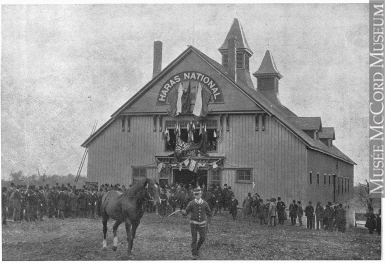
Figure 3 – Le Haras National à Outremont, QC, vers 1890. Musée McCord, MP-0000.1750.14.4.